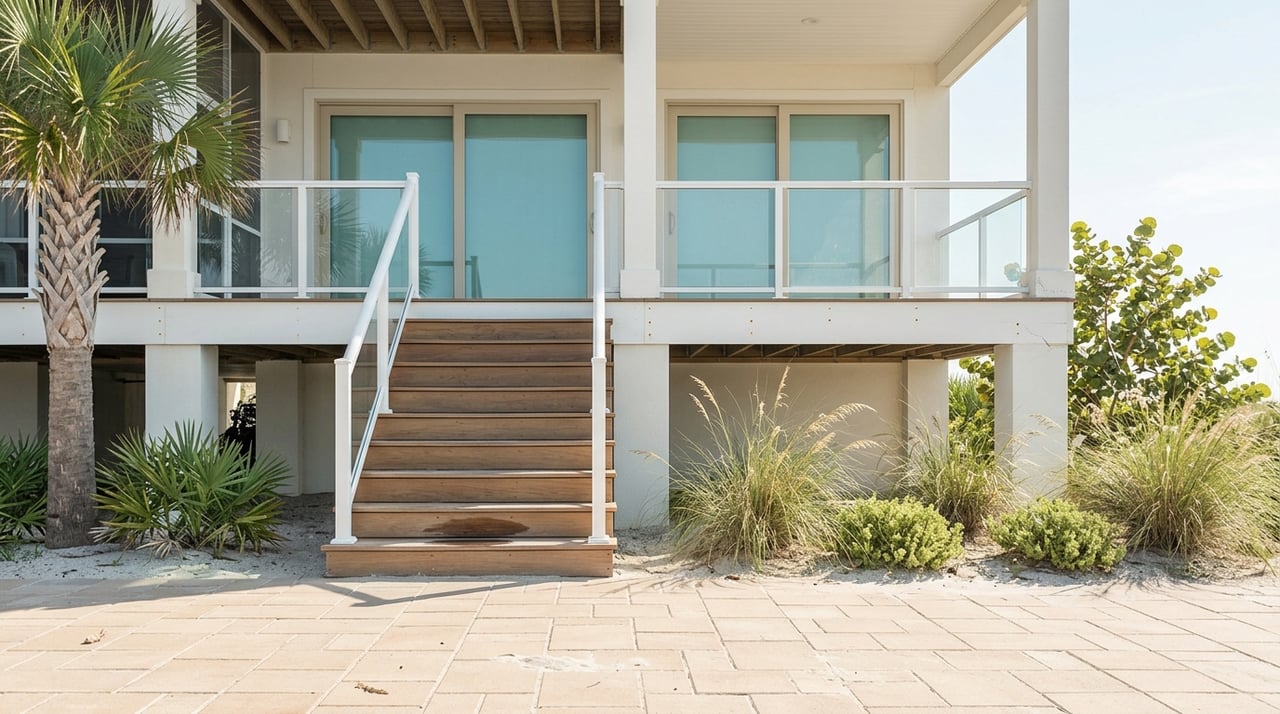
If your Gulf-front home in Panama City Beach has stunning views, you might assume it will sell quickly. Sometimes it does, but beachfront appeal alone does not control time on market. In this part of Bay County, buyers look closely at price, timing, insurance details, and property condition before they make a move. If you want a smoother sale and fewer surprises, it helps to understand what really moves the needle. Let’s dive in.
Gulf-Front Timelines Are Often Longer
A Gulf-front home does not always follow the same pace as the broader market. Public data shows Bay County homes have recently spent about 78 to 85 days on market, while Panama City Beach is around 84 days. Bay County homes have also been selling at roughly 97% of asking price, which points to a market where buyers are active but selective.
For many Gulf-front homes, county averages only tell part of the story. These properties often compete in a luxury or near-luxury segment, and longer selling timelines are common at higher price points. Florida Realtors data shows statewide single-family homes priced at $1 million or more took 50 days to contract in May 2026, while higher tiers stretched longer, including 62 days for the $2 million to $2.999 million range and 90 days for $10 million-plus homes.
That means a longer timeline is not always a red flag. For a well-positioned Gulf-front listing in Panama City Beach, the goal is not simply speed. The goal is to attract the right buyer with the right pricing, presentation, and documentation from day one.
Pricing Sets the Pace
If there is one factor that most directly affects time on market, it is the initial list price. Pricing too high can slow momentum early, and that early window matters more than many sellers realize. Realtor.com research found that the first four weeks are the make-or-break period, and homes that closed four weeks after listing had the strongest sale-to-list outcomes.
When a property starts above where buyers see value, the market often responds with hesitation. Showings may slow, online engagement may weaken, and price reductions can follow. Once a listing begins to feel stale, buyers may wonder what they are missing, even if the home itself is highly desirable.
For Gulf-front homes in PCB, realistic pricing should come from current Gulf-front comparables, not inland sales and not peak-cycle pricing from a different market moment. A beachfront property has its own buyer pool, cost structure, and risk profile. Those details matter when setting expectations.
Gulf-Front Buyers Compare More Than Views
Buyers shopping for a Gulf-front home are usually looking at more than architecture and beach access. They are also weighing ownership costs, future maintenance, and how easy the property will be to insure and finance. That added level of analysis can lengthen decision-making, especially for out-of-market buyers.
This is one reason premium homes can take longer to sell than the median property in Bay County. A buyer may love the setting but still pause over flood insurance needs, wind-resistance features, or permit history for past coastal work. In a coastal market, those questions are part of the purchase decision, not side issues.
The more clearly you answer those questions up front, the easier it is for a serious buyer to move forward with confidence.
Presentation Still Matters
Even in a data-driven market, presentation shapes how buyers respond in the first few moments. The National Association of Realtors reported that 83% of buyers’ agents said staging made it easier for buyers to visualize a home as their future home. In the same report, 49% of sellers’ agents said staging reduced time on market.
For a Gulf-front home, presentation should highlight both the property and the lifestyle. Clean spaces, neutral styling, natural light, and strong photography can help buyers focus on what makes the home special. If the home is vacant or lightly furnished, thoughtful staging can also help show scale and function.
Accurate visuals matter too. If virtual staging is used, it should reflect the home honestly. Buyers who travel to Panama City Beach for an in-person showing expect the property to match the story they saw online.
Condition and Documentation Build Confidence
Beachfront buyers often expect more documentation than sellers of inland homes. They want to understand how the home has been maintained, what improvements have been made, and whether any coastal construction work involved permits. In Florida, coastal construction and reconstruction can be regulated under the Coastal Construction Control Line program and related state requirements, so permit history can be an important part of buyer diligence.
Insurance-related documents also matter in a major way. Flood risk depends on factors like distance to water, flood type, elevation, and rebuild cost. In higher-risk flood zones, flood insurance may be required if the buyer uses a federally backed mortgage.
Wind-mitigation information can help as well. Florida requires insurers to explain hurricane mitigation discounts, and the Uniform Mitigation Verification Inspection Form may support premium reductions for wind-resistive features. For sellers, that means a strong pre-listing package can do more than answer questions. It can reduce friction.
Before listing, it helps to gather:
- Flood-zone information
- Elevation details, if available
- Current insurance information
- Wind-mitigation documents
- Permit history for major repairs or coastal work
- Roof, window, and storm-protection details
When buyers can review these details early, they may feel more comfortable making an offer without long delays.
Seasonality Can Change Buyer Traffic
Timing matters in Panama City Beach because visitor activity influences exposure. According to the city’s growth planning data, the area hosted 4.5 million visitors in 2023, with activity peaking in July, June, and May. April and March also represent a meaningful share of annual visitor volume.
For Gulf-front listings, that pattern matters because many second-home shoppers and out-of-market buyers pay closest attention when they are already visiting the area or actively watching the market during spring and early summer. More eyes on the market can mean more showing activity and better odds of reaching qualified buyers quickly.
That does not mean every home should wait for a certain month. It does mean your listing strategy should account for when buyer attention is naturally strongest in PCB. A well-prepared home launched into a high-visibility seasonal window often has an advantage over a similar home that comes to market without the same exposure.
Hurricane Season Can Slow Decisions
The Atlantic hurricane season runs from June 1 through November 30, and that can affect how buyers view Gulf-front homes later in the year. As storm season progresses, some buyers become more cautious about insurance availability, closing timelines, and near-term weather exposure.
This is especially important because standard homeowners insurance does not cover flood damage, and insurers may stop accepting new applications or coverage increases once a hurricane is approaching Florida. That can create practical delays even when buyer interest is strong.
For sellers, the takeaway is simple. If you plan to list during or near hurricane season, make sure your insurance and property documents are ready early. The easier it is for a buyer to assess risk and line up coverage, the less likely your sale is to lose momentum.
Why the First Few Weeks Matter Most
A Gulf-front listing usually gets its strongest market attention right after it goes live. New inventory tends to draw the most interest from buyers who have been waiting for the right property. That early attention is valuable, but only if the home is priced well and presented clearly.
If those first few weeks pass with low activity, buyers may begin to view the listing as overpriced or difficult. Even a later price adjustment may not fully restore the same level of urgency. That is why a thoughtful launch matters more than a rushed one.
A strong launch often includes:
- Pricing based on current Gulf-front comparables
- Professional presentation and photography
- Clear property details and honest marketing
- Insurance, flood, and mitigation documents ready for review
- A listing window that aligns with buyer attention in PCB
What Sellers Can Control Most
You cannot control every part of the market, but you can control several of the factors that most affect time on market. In Panama City Beach, that usually starts with price discipline and smart positioning. It also means preparing for the questions Gulf-front buyers are most likely to ask.
The sellers who create the best outcomes are often the ones who treat listing preparation like a strategy, not just a launch date. When your home enters the market with the right pricing, polished presentation, and a strong documentation package, you give buyers fewer reasons to hesitate.
That approach fits this market well. Gulf-front real estate in PCB can attract lifestyle buyers, second-home shoppers, and luxury buyers from outside the area, but those buyers tend to be careful. If you make it easy for them to understand the value and the facts, your home is better positioned to stand out.
If you’re thinking about selling a Gulf-front home in Panama City Beach, The Warren Group offers boutique coastal guidance, premium listing presentation, and local market strategy designed to help you enter the market with confidence.
FAQs
How long does it take to sell a Gulf-front home in Panama City Beach?
- Public market data places Panama City Beach around 84 days on market and Bay County around 78 to 85 days, but Gulf-front homes often compete in a luxury segment where longer timelines can be normal.
What affects time on market most for a PCB Gulf-front home?
- The biggest factors are initial pricing, property presentation, insurance and flood documentation, permit history, and the timing of your listing within the local seasonal market.
Why is pricing so important for Gulf-front homes in Bay County?
- Pricing sets the tone for the first few weeks, which is often the most important window for buyer interest. Starting too high can lead to fewer showings, price cuts, and a stale-market perception.
Do flood-zone and insurance details matter to Panama City Beach buyers?
- Yes. Buyers often evaluate flood exposure, elevation, financing requirements, wind-mitigation features, and likely insurance costs before they make an offer on a Gulf-front property.
When is the best time to list a Gulf-front home in PCB?
- Spring and early summer often bring stronger buyer attention because Panama City Beach sees high visitor activity during those months, which can increase exposure to second-home and out-of-market buyers.
Can hurricane season affect a Gulf-front home sale in Florida?
- Yes. Hurricane season can make buyers more cautious, and approaching storms can affect insurance applications or coverage changes, which may slow a transaction if documents are not prepared early.