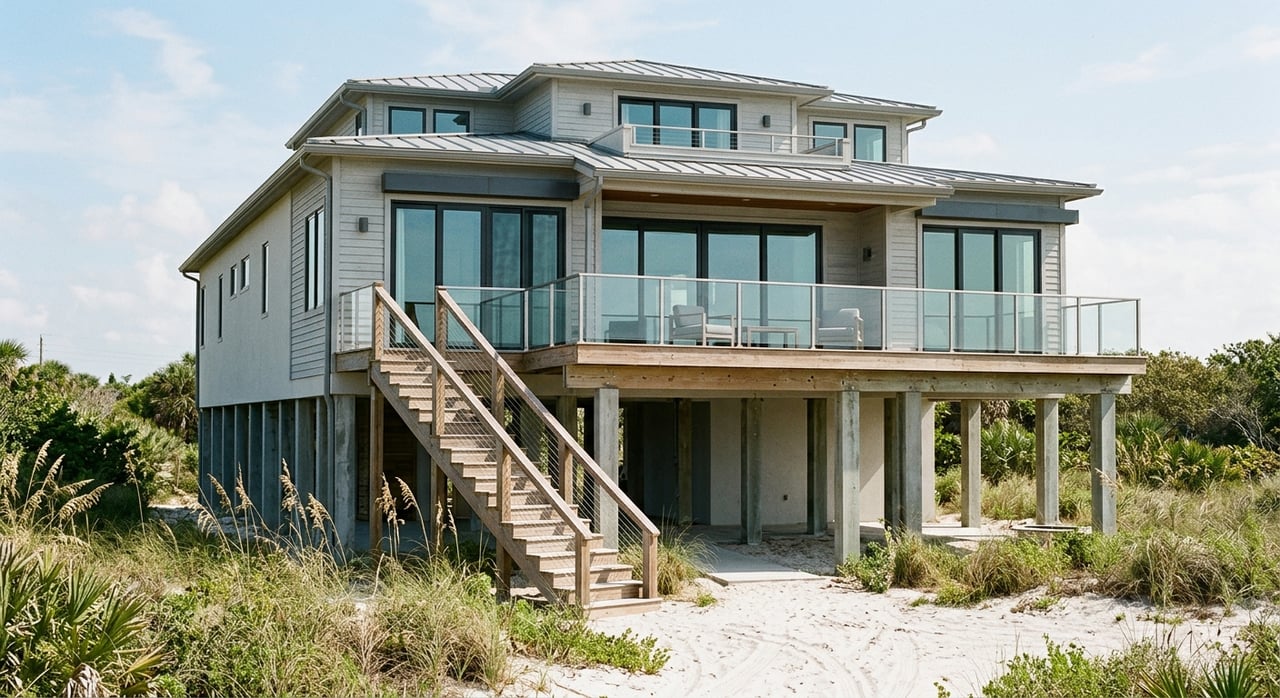
Wondering why one Gulf-front home in Panama City Beach can command a very different price than another just a few doors away? If you are buying or selling on the beach, that question matters because waterfront pricing here is shaped by far more than square footage or a tax value. When you understand what really drives price, you can make smarter decisions, set better expectations, and move forward with more confidence. Let’s dive in.
Gulf-front pricing starts with the market
When people talk about value, it is easy to look at a tax record and assume that number reflects what a home should sell for. In Bay County, that is not how pricing works in a real-world transaction. The property appraiser uses market data, comparable sales, construction costs, rents, and current property characteristics to estimate value for tax purposes, with annual value set as of January 1.
For a Gulf-front home, the better starting point is a true comparable sale analysis. Bay County’s Property Appraiser notes that sales of similar properties are strong indicators of value, which means recent waterfront comps should lead the conversation. In practice, that means comparing homes with similar lot characteristics, view quality, condition, and location along the beach.
This is why assessed value and market value often differ. A buyer’s offer still comes down to negotiation, scarcity, and the specific strengths or constraints of that property. On Gulf-front homes, those property-specific details can create much wider pricing gaps than many buyers and sellers expect.
Why coastal site factors matter most
On the Gulf, location is not just about being on the water. It is also about flood exposure, evacuation considerations, and how much of the lot is actually usable once coastal rules and setbacks are applied. Those factors can directly shape both current value and future renovation options.
Bay County maps Special Flood Hazard Areas, including A and V zones, and notes that Zone A is along the water and would typically be the first evacuation zone considered. The City of Panama City Beach permit process also requires a boundary and topographic survey showing easements, rights of way, the Coastal Setback Line or Coastal Construction Control Line, and a flood-zone determination from FEMA maps. In simple terms, two homes with similar interiors can still price very differently if one lot has fewer site constraints.
Florida’s Coastal Construction Control Line program is designed to protect beaches and dunes from improperly sited or designed structures. That means a parcel with a larger buildable envelope, better elevation, or fewer dune and setback limitations may carry a pricing advantage. It is not a fixed formula, but it is a real part of how buyers and sellers evaluate Gulf-front property.
Flood risk changes ownership costs
Flood risk affects more than storm planning. It also affects the economics of owning the home. Bay County states that standard property insurance does not cover flood damage, and the county participates in the National Flood Insurance Program.
Bay County also notes that it is highly prone to flood hazards from hurricanes, tropical storms, and intense rainfall. For Gulf-front buyers, that means insurance and risk exposure become part of the pricing conversation. For sellers, it means a well-documented property can help buyers understand the full ownership picture.
Renovation history can affect value
Older Gulf-front homes may have another pricing variable that newer buyers do not always see at first glance. Bay County says that if reconstruction, rehabilitation, additions, or other improvements equal or exceed 50 percent of a building’s market value within a 10-year period, the work is generally treated as substantial improvement.
If that threshold is triggered, the structure must typically meet new-construction standards, often including raising the living area to base flood elevation or above. That makes elevation, retrofit history, and prior improvements especially important when pricing an older beachfront home. A property that is already better aligned with current standards may compete differently than one with more future compliance risk.
Lot, view, and privacy create value tiers
In Panama City Beach, Gulf-front homes often fall into natural value tiers. The top tier usually includes homes with cleaner sight lines, stronger privacy, more usable lot depth or frontage, and fewer barriers to future improvements. These are the homes that tend to stand out quickly when buyers compare options.
The middle tier usually includes homes that still offer direct Gulf frontage but come with tradeoffs. That could mean less ideal orientation, tighter outdoor space, or a property that may need more planning for updates. These homes can still be highly desirable, but the pricing tends to reflect those compromises.
Lower tiers do not mean poor properties. More often, they reflect older construction, smaller or more constrained sites, or greater complexity if the next owner wants to renovate or rebuild. On the beach, land and house value are tightly connected, so even subtle lot differences can move a home from one pricing tier to another.
Public access can influence privacy
Bay County has 96 public beach access points stretching from the east end of Thomas Drive to the west end of Front Beach Road. That matters because proximity to a public access point can affect how private a Gulf-front home feels day to day.
For some buyers, nearby access improves convenience and beach usability. For others, more public activity nearby may reduce the sense of separation they want from a beachfront home. That tradeoff can help explain why two homes with similar frontage still land at different price points.
View quality drives premiums
View quality is one of the clearest pricing drivers on the Gulf. A home with an uninterrupted panorama, strong sunset exposure, or a more elevated sight line will often compete differently than a home with views filtered by neighboring roofs, dune vegetation, or nearby activity.
There is no universal dollar amount for a better view. Still, the market tends to reward the properties that deliver the clearest and most protected visual experience. For many Gulf-front buyers, the view is not just an amenity. It is a major part of what they are paying for.
Location within Panama City Beach matters
Panama City Beach is not a one-price beachfront market. Different stretches of the beach attract different buyer priorities, and that shapes what buyers are willing to pay. The result is a more segmented pricing story than broad county averages can show.
Near Pier Park and Russell-Fields City Pier
Pier Park is described by Visit Panama City Beach as the city’s premier shopping and entertainment destination, with 124 stores, dining, and entertainment venues. The nearby Russell-Fields City Pier is also one of the area’s most popular attractions.
Homes in this corridor often appeal to buyers who value walkability and easy access to shopping, dining, and activities. At the same time, some buyers may weigh that convenience against heavier traffic and more visitor activity. That is why pricing here can reflect both amenity access and the energy level of the surrounding area.
Near Frank Brown Park
Frank Brown Park is a 100-plus-acre recreational hub with athletic fields, walking trails, an aquatics center, playgrounds, and year-round programming. Gulf-front homes with convenient access to this area can appeal to buyers who want more year-round utility from their location.
That broader lifestyle use can influence demand in a different way than pure beachfront appeal alone. For some buyers, easy access to recreation and local amenities adds another layer of value beyond the sand and views.
Near St. Andrews State Park
On the east side of Panama City Beach, St. Andrews State Park offers over a mile of beach along with swimming, fishing, camping, snorkeling, kayaking, surfing, and other year-round recreation. Homes near this end of the beach can appeal to buyers drawn to a quieter, more nature-oriented setting.
That creates a different value profile from the activity-rich Pier Park area. Neither is universally better. They simply attract different buyers, which can create different pricing patterns depending on the property and the audience.
Questions to ask before pricing a Gulf-front home
Whether you are buying or preparing to sell, strong pricing starts with the right questions. Before settling on a number, it helps to clarify the factors that most often move a home up or down in value.
Here are some of the most important questions to ask:
- Which flood zone is the property in?
- Which evacuation zone affects the home?
- Is there a current elevation certificate?
- How much of the lot is buildable after setbacks, easements, rights of way, and coastal control lines are applied?
- Has the property had major repairs or improvements that could affect substantial-improvement status?
- Which recent comparable sales truly match the home’s lot, view, age, condition, and location?
These questions matter because Gulf-front pricing is rarely just about the house itself. It is about the full package of land, view, compliance, ownership costs, and lifestyle appeal.
What this means for buyers and sellers
If you are buying a Gulf-front home in Panama City Beach, it helps to look past the headline price and understand what supports it. A home with stronger elevation, fewer site constraints, cleaner views, or better privacy may justify a premium that is not obvious in an online search. In contrast, a lower asking price may reflect future costs or limitations that deserve a closer look.
If you are selling, pricing well means presenting more than bedroom count and square footage. Buyers want clarity on the lot, the view, the flood and permit context, and how your property fits into the right competitive set. The strongest pricing strategy is usually the one that combines local market knowledge with careful property-specific analysis.
Along the Gulf, details drive value. And when those details are understood and positioned clearly, buyers and sellers are better equipped to make confident decisions in a very specific market.
If you are thinking about buying or selling a Gulf-front home in Panama City Beach, The Warren Group offers the local insight, tailored strategy, and high-touch service to help you price and navigate the market with confidence.
FAQs
How are Gulf-front homes in Panama City Beach priced?
- Gulf-front homes are typically priced using recent comparable sales and property-specific factors such as lot characteristics, view quality, condition, flood exposure, and location within Panama City Beach.
Why is tax value different from market price for Panama City Beach Gulf-front homes?
- Bay County’s appraised value is used for tax purposes, while market price is shaped by buyer demand, negotiation, scarcity, and the specific features of the home and parcel.
Do flood zones affect Gulf-front home prices in Panama City Beach?
- Yes. Flood zones can affect risk, insurance costs, evacuation considerations, and future building or renovation requirements, all of which can influence pricing.
What lot features matter most for Gulf-front home value?
- The most important lot features often include usable frontage, lot depth, elevation, buildable area after setbacks and easements, and how protected the views and privacy feel.
Does being near Pier Park change Gulf-front home values?
- It can. Homes near Pier Park may attract buyers who want convenience and walkability, while others may weigh that against more traffic and visitor activity.
What should sellers review before pricing a Gulf-front home in Panama City Beach?
- Sellers should review comparable sales, flood-zone information, elevation data, lot surveys, coastal setback or control line impacts, and any renovation history that could affect future compliance requirements.