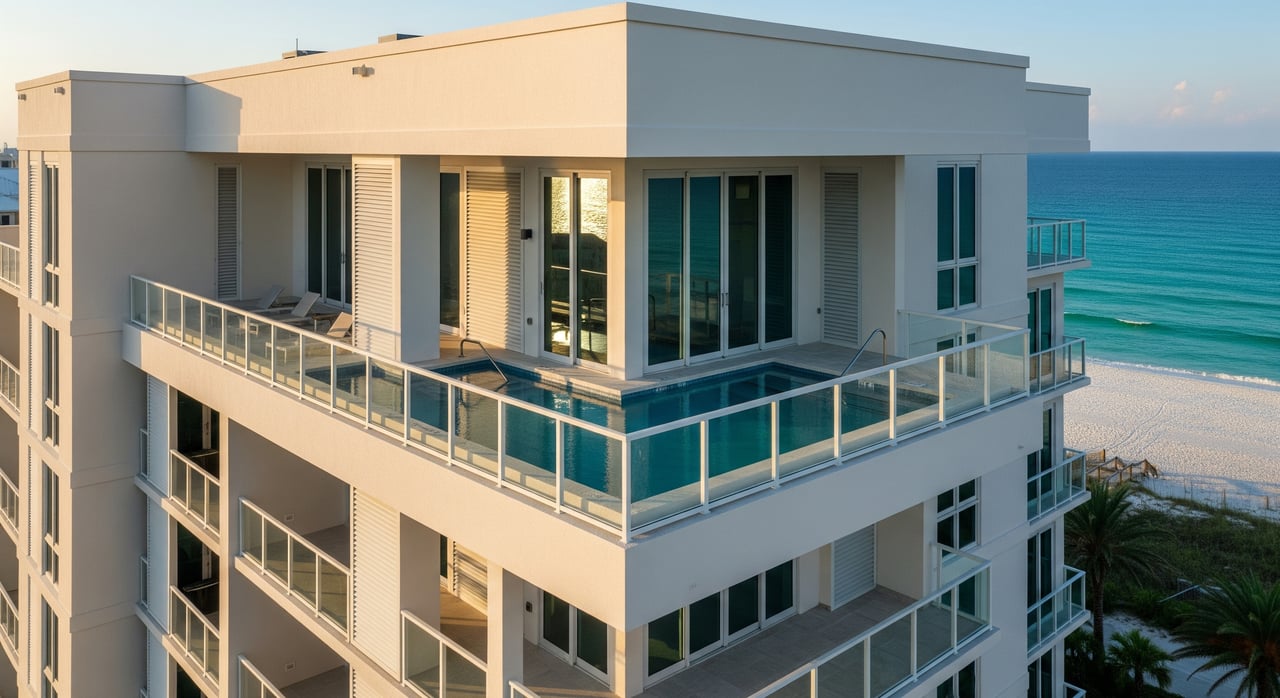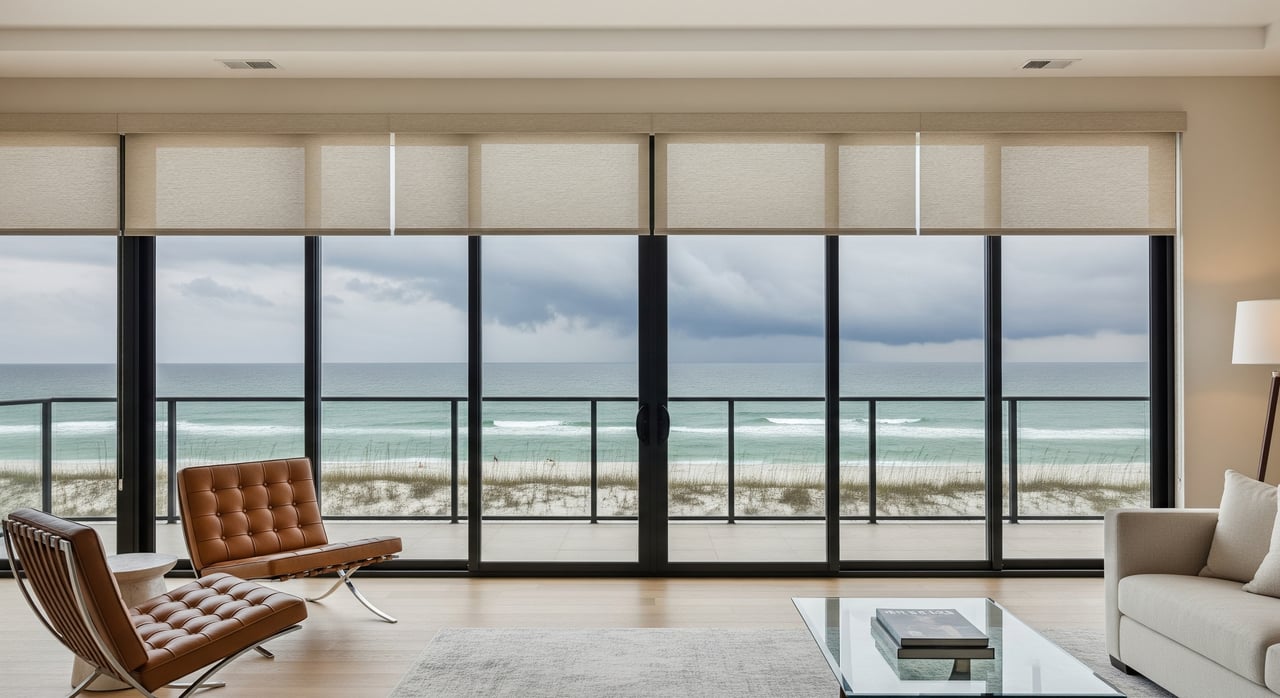
Salt air, wide Gulf views, and walkability to Pier Park make Calypso a standout. But living this close to the water also means preparing your condo for wind, water, and debris. You want protection that feels seamless day to day and delivers when storms threaten. In this guide, you’ll learn how impact glass and storm shades work, what Calypso owners should know about code and HOA approvals, ballpark costs and insurance credits, and the smart steps to take next. Let’s dive in.
Why impact glass matters at Calypso
Calypso’s towers sit right on the beach, inside Florida’s wind-borne debris region. State code requires that glazed openings near the Gulf be protected by impact-rated windows or approved shutters. That is the baseline for safety and for permitting in Panama City Beach.
Recent events underscore why this matters. In February 2024, Calypso Tower III saw a city-ordered evacuation tied to guardrail integrity during inspection. The takeaway is simple: coastal high-rise components are inspected, and the association and city enforce safety requirements. Staying ahead with resilient glazing and approved storm protection is part of responsible ownership at the beach. Local coverage of the Tower III evacuation provides context.
What impact glass is
Impact glass uses laminated glazing and tested window or door frames to resist debris strikes and wind pressure. Products are certified through standards referenced by the Florida Building Code, then listed with Florida Product Approvals or Miami-Dade Notices of Acceptance. You get protection first, plus quieter interiors, UV reduction, and energy benefits. FEMA and industry guidance treat opening protection as a primary mitigation measure because it helps keep the building envelope intact. Learn more about the testing approach in the Florida Building Code guidance and the resilience benefits in FEMA’s mitigation guide.
Verify approvals and ratings
Before you buy, confirm the exact model and installation details in the Florida Product Approval database or via a Miami-Dade NOA. Check design pressure ratings and anchorage requirements, then match them to your opening sizes and exposure. You can search current listings at the Florida Product Approvals database.
Permits and inspections in PCB
Exterior window and shutter work at Calypso typically requires a local permit and inspections. Use licensed contractors, follow the listed installation instructions, and keep every sign-off for your records. See the City’s process on the Panama City Beach Building and Planning page.
Shades vs storm coverings
“Shades” gets used two ways, so it helps to separate them.
- Interior shades include solar, roller, or blackout shades that improve privacy, glare control, and UV protection. These boost comfort but do not provide debris or wind protection and do not satisfy code requirements for storm protection.
- Storm coverings or shutters are exterior systems designed and rated to protect openings. When approved and installed correctly, they can meet code for debris resistance.
Common storm protection options
- Roll-down shutters: Permanent housing above the opening, motorized or manual. Strong protection and very fast to deploy. Higher cost and visible boxes, so check HOA specs. Reference styles in this Florida shutter guide.
- Accordion shutters: Permanently mounted tracks on the sides. Moderate cost, easy to close by hand, visible rails on the facade. See use-case notes in the Florida shutter guide.
- Aluminum or polycarbonate panels: Removable and budget-friendly. Require storage and time to install before a storm. Typical per-square-foot costs trend lower than permanent systems. See ranges in this cost overview.
- Bahama or colonial shutters: Architectural look with rated protection when closed. Bahama styles also add shade when propped open. Confirm HOA aesthetic rules.
- Hurricane fabric panels: Lightweight, certified panels that attach to anchors. Easier to handle, but installation must follow approved details.
Whatever you choose, shutter systems must carry a Florida Product Approval or Miami-Dade NOA and be installed per the listed anchorage to meet code. The same verification principles apply as with impact glass.
Costs, comfort, and insurance credits
Installed costs vary by opening size, frame type, rating, and tower logistics. Statewide quotes show impact windows ranging from several hundred to over a thousand dollars per opening, with whole-unit projects reaching many thousands. Shutters often price by the square foot. Panels tend to be lowest cost, accordion in the middle, and motorized roll-downs at the top of the shutter spectrum. For broad ranges, see this shutter cost overview. For impact window context, statewide contractor quotes are summarized in industry comparisons that place impact glass higher per opening but with year-round comfort benefits.
Florida law requires insurers to include discounts for wind mitigation features. Credits depend on whether all openings are protected and on your carrier’s rate filings. To pursue savings, you will need documentation such as product approvals and a wind mitigation inspection. Review the statute on mitigation discounts. Actual premiums vary, so confirm with your insurer before assuming a specific reduction.
HOA rules and Calypso considerations
Florida condominium law gives you the right to install compliant hurricane protection, while allowing the board to set reasonable specifications and to operate systems when needed to protect the property. The key is alignment with the declaration and board-adopted standards. Read the statute on hurricane shutters and impact glass.
At Calypso, start by confirming who is responsible for windows and exterior doors. Some associations maintain exterior openings as common or limited common elements, while others assign replacement to owners. Your declaration and board resolutions will control. Even if you are responsible, you will still need architectural approval and a local permit for exterior work. The City outlines permitting on the Panama City Beach Building and Planning page.
Your 5-step checklist
Review governing documents. Confirm whether windows and shutters are an owner or association responsibility and request any board specs for products, colors, and mounting.
Select approved products. Choose impact windows or shutters with a Florida Product Approval or Miami-Dade NOA that cover your opening sizes and design pressures. Verify details at the Florida Product Approvals database.
Apply for ARC and permits. Submit product documentation with your HOA application, then obtain a City of Panama City Beach permit and schedule inspections. See the City’s process on the Building and Planning page.
Hire licensed condo-experienced installers. Require adherence to the listed installation details, especially anchorage and fasteners for high-rise exposure. Ask for references from similar beachfront projects.
Document and insure. Keep product approvals, installation certificates, and final inspection sign-offs. If you plan to seek insurance credits, schedule a wind mitigation inspection and confirm the insurer’s required paperwork. For the legal basis on credits, review Florida’s mitigation statute.
Make your Calypso condo storm-ready
Impact glass and rated storm coverings give you more than peace of mind. They help meet code, protect your interior, reduce noise and UV, and may unlock insurance credits when documented. Pair these upgrades with clear HOA coordination and proper permits, and you will be ready long before the next storm watch.
If you are weighing upgrades for resale value, rental appeal, or personal comfort, we can help you think through the best path for your Calypso unit. For local guidance tailored to your goals, connect with The Warren Group.
FAQs
What does Florida code require for window protection at Calypso?
- Calypso sits in a wind-borne debris region, so glazed openings must be protected with impact-rated windows or approved shutters that meet Florida Product Approval or Miami-Dade NOA and are installed per listed details.
Do interior roller shades count as hurricane protection for Calypso condos?
- No. Interior shades add comfort and UV control but do not provide debris or wind protection, so they do not satisfy code; use impact glass or approved shutters instead, as described in this Florida shutter guide.
How can I verify that a window or shutter is approved for my Calypso unit?
- Look up the exact product and configuration in the Florida Product Approval database or a Miami-Dade NOA and confirm design pressures and anchorage before purchase or installation at the Florida Product Approvals database.
Who pays for window or shutter upgrades in a Florida condo like Calypso?
- Responsibility depends on the recorded declaration and board rules; Florida Statute 718.113 protects your right to install compliant protection, but the association can set specifications and may be responsible for some elements.
Will impact glass help lower my Panama City Beach condo insurance premium?
- Florida law requires insurers to include wind mitigation credits; savings vary by carrier and whether all openings are protected, and you will need documentation and a wind mitigation inspection to qualify per Florida’s mitigation statute.
Do I need a permit to install shutters or replace windows at Calypso?
- Yes. Exterior work typically requires a City of Panama City Beach permit and inspections, plus HOA approval; see the process on the Building and Planning page.